
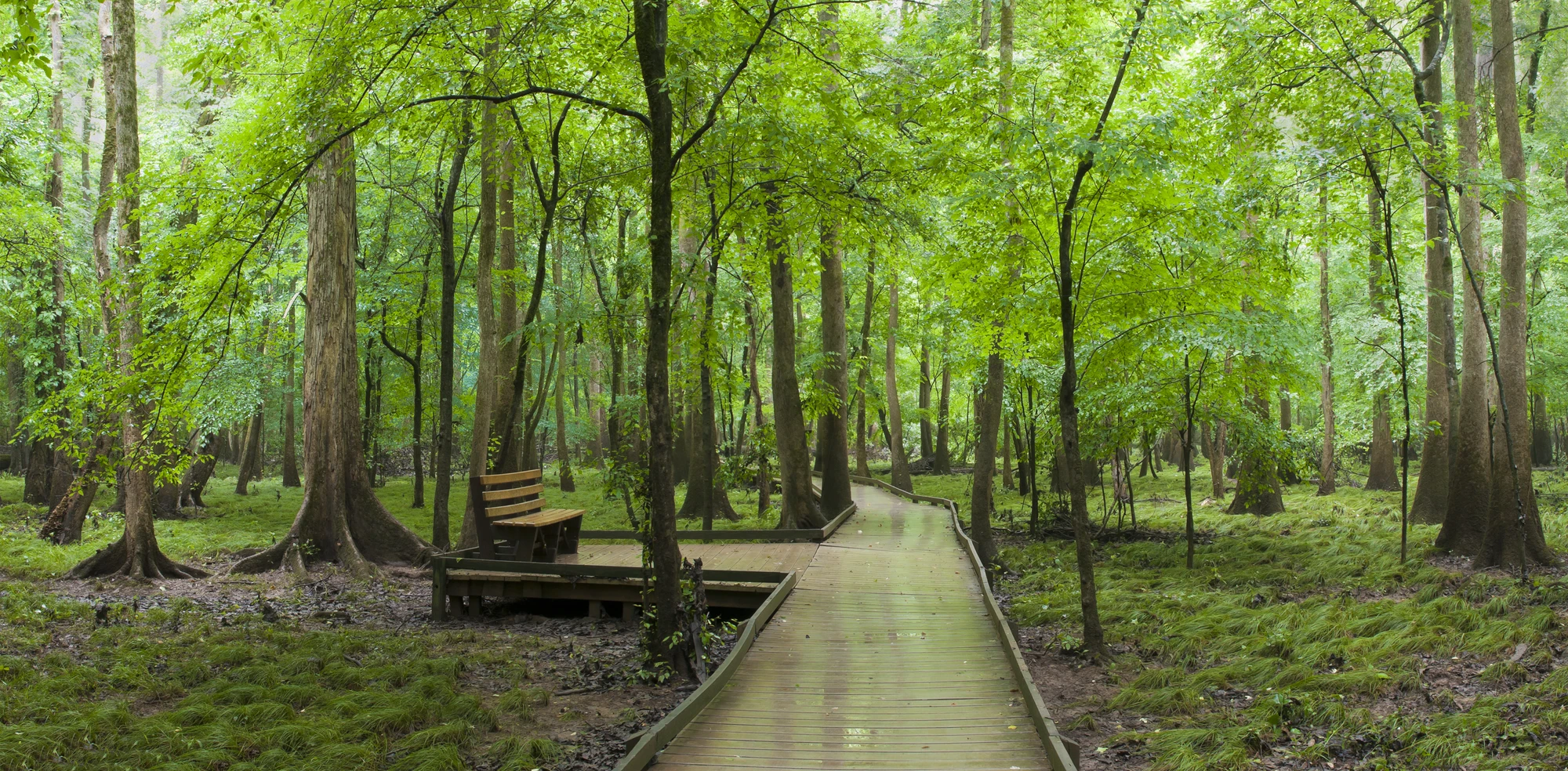
Congaree National Park
Congaree National Park pairs boardwalk hiking with flatwater paddling and world-class birding in a rare old-growth bottomland forest. Stack a morning canoe trip with an afternoon loop on raised trails, then top off the day at a campsite or local B&B in Hopkins for easy access to the park.
"Ancient cypress cathedrals and slow river paddles invite immersive, low-angle adventure in a living swamp."
Alle avonturen
Bootcharters
Wateractiviteiten
Plan for boardwalk hikes beneath towering cypress and tupelo, quiet canoe or kayak floats on the Congaree River, and birding that rewards patient eyes. Add an evening at a backcountry campsite for night sounds and starry breaks in the canopy, or choose a guided paddle that navigates seasonal water levels. Short scenic drives from Hopkins bring you to multiple trailheads; pack for heat, bugs, and occasional mud so you can move quickly between water and forest.
Why Visit Congaree National Park
Step into a forest that feels older than the maps that surround it. Congaree National Park funnels river, forest, and sky into a single, slow-moving landscape: boardwalks thread through cathedral-like trees while the Congaree River nudges canoeists downstream. The park's scale and quiet make it a place for deliberate outdoor pursuits—hiking, paddling, birding—rather than speed.
The geology and history of Congaree are straightforward but profound: sediment-laden rivers deposited floodplain soils over millennia, allowing massive bald cypress and tupelo trees to take root and rise. Logging spared patches of this lowland forest here and there until the area gained protection; today those legacy trees define the park and give it a distinct verticality uncommon in the coastal plain. The floodplain breathes with seasonal rhythm—high water makes the river the main highway, low water exposes braided channels and mudflats that birds claim. Respecting those rhythms is part of visiting: timing your paddle for safe conditions and choosing trails that match recent weather keeps the visit enjoyable.
Culturally, the region is tied to small-town South Carolina traditions—river life, local hunting and fishing knowledge, and communities that remember working the land. Hopkins and nearby towns provide practical services and genuine southern hospitality; local outfitters run guided canoe trips and can point you toward quieter launch spots. For planning, concentrate your trip on the activities you want most: early mornings for birding and cool walks, mid-day paddles that dodge afternoon storms in summer, and late-afternoon light for photography. Facilities are minimal in places, so bring water, easy repair kits, and a means to keep gear dry when river levels rise.
From an adventure perspective, Congaree favors low-impact, technically simple outings executed with thoughtful preparation. Short boardwalk loops deliver high payoff for limited time, while multi-hour paddles and overnight backcountry camping extend the experience into a full wilderness immersion. Tell your agent what balance of comfort and wilderness you want—do you prefer a guided canoe and a hotel in Hopkins, or self-supported camping and a lightweight approach? That choice shapes ferrying logistics, shuttle needs, and where you book lodging or permits.
Quick Facts
- Activity mix: boardwalk hiking, flatwater paddling, birding, and backcountry camping.
- Seasonal notes: spring and fall are most comfortable; summer is hot and humid with afternoon storms.
- Access: primary access from Hopkins and the park's main visitor center; short scenic drives connect multiple trailheads.
- Crowds: popular on weekends and during fall bird migration—arrive early for solitude.
- Water conditions vary by season—paddles may require higher water or portaging during low flow.
- Park services are basic; expect limited cell coverage in deep forest areas.
Essential
- Reusable water bottle or hydration system
- Traction footwear or waterproof hiking shoes
- Lightweight layers and sun-protective clothing
- Insect repellent and sunscreen
- Topo or offline map and a small first-aid kit
- Snacks and electrolyte replenishment
Recommended
- Light rain shell or waterproof jacket
- Dry bag for electronics and gear
- Headlamp or compact flashlight
- Trekking poles for muddy trail sections
Optional
- Binoculars for birding
- Action camera or telephoto lens
- Portable phone charger
Best Time to Visit Congaree National Park
Best Months
Spring and fall offer the most comfortable temperatures and active wildlife; summers are hot, humid, and prone to afternoon thunderstorms while winters are mild but damp. Water levels change with rainfall, affecting paddling and trail conditions.
Peak Season
Peak visitation occurs during spring blooms and fall migration periods; book guided paddles, campsites, and nearby lodging in advance and plan early starts to avoid crowds.
Off Season Opportunities
Winter offers quiet trails and lower visitor density, while summer can mean value on midweek stays if you tolerate heat and bugs; watch for muddy sections and higher water when choosing routes.
Congaree National Park Adventures by Experience Level
Short, low-effort activities for newcomers that emphasize safety and observation.
Sample Activities:
- Boardwalk loop near the visitor center
- Guided flatwater canoe introduction
- Short wildlife viewing and photography stops
Longer outings that require basic paddling or navigation experience and steady footing on wet trails.
Sample Activities:
- Self-guided multi-hour canoe or kayak paddle
- Extended trail loops off the raised boardwalks
- Overnight car-to-campsite backcountry stay
Multi-day river-focused travel requiring paddling experience, efficient gear, and comfort with variable water levels.
Sample Activities:
- Multi-day canoe expedition with portages and campsite selection
- Solo or small-team navigation during high-water conditions
- Photography or research-focused night observations deep in the floodplain
Insider Tips
Verify seasonal closures, access points, and current water levels with park authorities before your trip.
Arrive early on weekends to secure parking and enjoy quieter wildlife windows; late afternoon tends to be busier along the main boardwalk. On weekdays you’ll find more solitude and easier access to canoe launches. If rain is in the forecast, switch plans to a shorter boardwalk loop or delay paddles—high water can alter routes and portage needs. Respect wetland etiquette: stay on raised trails where provided, pack out trash, and avoid driving through flooded access roads. Sunrise and sunset offer the most active birding, so plan your timing around golden-hour light and insect activity.
Frequently Asked Questions About Visiting Congaree National Park
Congaree National Park, located near Hopkins, South Carolina, is an exceptional destination for lowland forest exploration, offering a blend of hiking, paddling, birding, and backcountry camping that appeals to travelers seeking a quiet, immersive outdoor experience. The park’s raised boardwalks and trails make hiking accessible through ancient floodplain forest while the Congaree River invites flatwater canoeing and kayaking along sinewy channels. Birders come here for migratory and resident species; bring binoculars and a patient eye to catch woodpeckers, herons, and elusive warblers. For paddling trips, be mindful that water levels fluctuate seasonally—higher water simplifies route-finding but can change campsite access, while low-water conditions expose mudflats and require basic navigation skills. Planning a trip to Congaree means stacking experiences: pair an early-morning birding walk with a midday guided canoe float, or schedule a multi-day itinerary that includes backcountry camping to hear the swamp at night. Unlike mountainous parks, Congaree’s adventure character is slow and tactile—trunks, knees-deep channels, and the rustle of canopy life—so pack accordingly. Because the park lacks extensive visitor infrastructure deep in the forest, many visitors opt for nearby Hopkins lodging and local outfitters who provide shuttles and guided paddles. If you’re searching for keywords like hiking Congaree National Park, paddling Congaree River, birdwatching Hopkins South Carolina, or backcountry camping in coastal plain swamp, Congaree fits those interests without the technical demands of high-altitude trips. When building an itinerary, allow for weather pivots: spring and fall are ideal for comfortable hiking and active wildlife, while summer requires heat management and insect defenses. There are no prominent waterfalls here and mountain biking is not a primary activity; focus instead on flatwater boating, boardwalk exploration, and photography under massive cypress. Whether you’re planning a day trip from Columbia or a longer adventure with an overnight paddle, Congaree National Park rewards patient travelers who come prepared for humidity, changing water, and extraordinary old-growth forest scenery.
Whether you're searching for a travel agent in Congaree National Park, a South Carolina trip planner, or expert guidance for your Congaree National Park, our team is here to help. As specialized outdoor adventure travel agents serving the Congaree National Park area, we offer personalized itinerary planning, local expertise, and insider access to the best experiences. Contact a Congaree National Park travel agent today for a free consultation.